
MD/IVD CE Mark
EU Product Registration
Before placing a medical device or in vitro diagnostic device on the market, manufacturers must register or notify the product with the appropriate Competent Authority or through EUDAMED, as required by the applicable regulations.
A Competent Authority is the national regulatory body responsible for overseeing the registration and vigilance of medical devices and in vitro diagnostic devices. As your EU Authorised Representative, Medunion will handle the registration of your MD/IVD products in Spain, where AEMPS (Agencia Española de Medicamentos y Productos Sanitarios) serves as the supervising Competent Authority.
EUDAMED
Established under Regulation (EU) 2017/745 (MDR), it facilitates information exchange between Competent Authorities and the European Commission, supporting transparency and regulatory oversight.
EUDAMED (European Database on Medical Devices) is the central EU database for medical devices placed on the European market. Entities such as manufacturers, authorised representatives, importers, and system or procedure pack producers operating in the EU, as well as in Iceland, Liechtenstein, Turkey, or Northern Ireland, must register in the EUDAMED database. Non-EU manufacturers may only register if their authorised representative is based within one of these regions.
Each eligible entity applies for actor registration and is assigned a unique Single Registration Number (SRN). If an entity performs multiple roles—such as manufacturer and importer—it must register each role separately and will receive a distinct SRN for each.
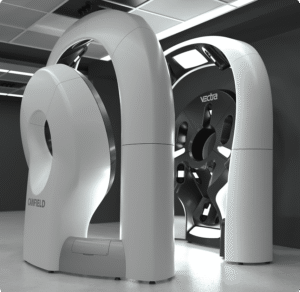
We provide full scope of medical product registrations
Partner with us for end‑to‑end support in bringing your medical device to market while meeting all mandatory EU quality and safety requirements. We also help you align with relevant voluntary, brand‑specific, and client‑specific standards to strengthen trust with regulators and customers.
Class I (Low Risk)
Non-invasive devices (e.g., bandages, hospital beds) and some active devices.
Class Is,im,ir
Includes Class Is (sterile), Class Im (measuring), and Class Ir (reusable surgical instruments).
Class IIa (Medium Risk)
Devices used for short-term monitoring, or contact with injured skin, such as ultrasound diagnostic equipment or hearing aids.
Class IIb (Medium/High Risk)
Devices for long-term use, such as ventilators, intensive care monitoring equipment, or contraceptive devices.
Class III (High Risk)
Devices in contact with the heart/central nervous system, implants, or those that are life-sustaining, such as heart valves or pacemakers.
Software
Stand-alone software that aids in diagnosis or treatment decisions is generally Class IIa or higher, potentially rising to Class III if it could lead to death or irreversible harm.
IVD devices
MDR Class A(lowest) to D(highest) and legacy products from IVDD
Active medical devices
Instruments that depend on a source of electrical energy or a power source other than human/gravity-generated energy to function.
FAQ
What technical documentation is needed for registration?
Manufacturers must compile technical documentation covering device description, design and manufacturing, risk management, verification and validation, clinical evaluation, labeling, and post‑market surveillance planning.
What is the role of clinical evaluation?
Clinical evaluation demonstrates that the device is safe and performs as intended by assessing clinical data from literature, equivalent devices, and/or clinical investigations.
Do I have to register my device in each EU country separately?
CE marking allows free circulation across the EU, but until EUDAMED is fully implemented some Member States still require additional local notifications or registrations with their competent authorities.
What is EUDAMED and how does it affect registration?
EUDAMED is the EU’s central database for medical devices; it will progressively become the main platform for registering economic operators and devices, improving transparency and traceability.
How long does the EU registration and CE‑marking process take?
Timelines vary widely by device class and readiness of documentation, but manufacturers should expect several months for low‑risk devices and potentially 12–24 months or more for higher‑risk products requiring Notified Body review. improving transparency and traceability.
What is required to place a medical device on the EU market?
A device must meet the EU Medical Device Regulation (MDR 2017/745), undergo the appropriate conformity assessment, and bear the CE mark before being placed on the EU market.
Do non‑EU manufacturers need an EU Authorised Representative?
Yes. Any manufacturer located outside the EU must appoint an EU‑based Authorised Representative to act as their regulatory contact and fulfil certain legal obligations on their behalf.
How are medical devices classified in Europe?
Devices are classified into Class I, IIa, IIb, or III based on risk, invasiveness, and duration of use; higher‑risk classes require more stringent conformity assessments and clinical evidence.
When is a Notified Body required?
A Notified Body is required for most Class IIa, IIb, and III devices, and for certain Class I devices with a measuring function or sterile component; only low‑risk self‑certified Class I devices can skip Notified Body involvement.
Streamlined Compliance for the European Market
Reliable Representation for EU Regulatory Affairs